This is a demo store. No orders will be fulfilled.


 CAN
CAN  US/Global
Free Reproducibles
Solving the Literacy Puzzle
Practical Strategies for Integrating the Science of Reading Into Classroom Instruction
This book consolidates decades of research on effective literacy instruction. It provides a clear model for designing effective reading instruction that integrates the science of reading and evidence-based strategies. Teachers and educators can learn to confidently implement these strategies in the classroom.
Benefits
- Understand the roles of whole-group, small-group, and independent work.
- Learn five core literacy components within the science of reading framework.
- Consider the history of reading instruction and the research behind the science of reading approach.
- Access templates, rubrics, self-assessments, and other resources.
- Select appropriate instructional texts for students at all reading levels.
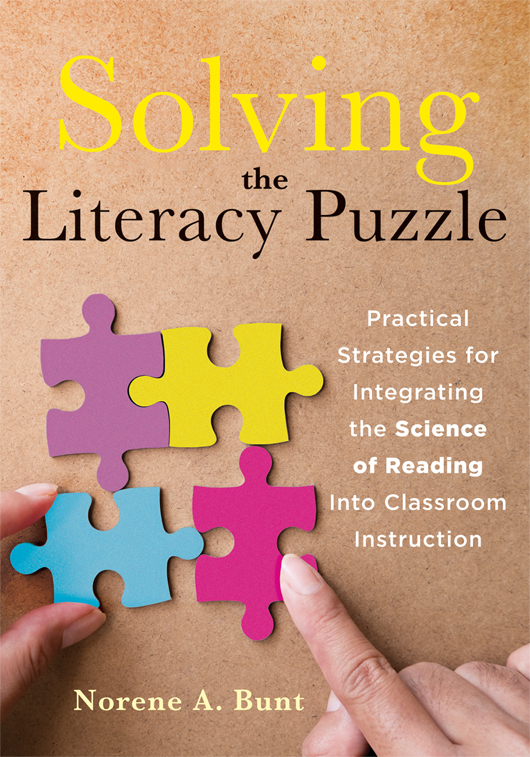
TABLE OF CONTENTS
Introduction
Chapter 1: Literacy Instruction and Why It Matters
Chapter 2: Text Selection and Instructional Grouping
Chapter 3: Vocabulary Instruction and Word Retention
Chapter 4: Phonemic Awareness and Language Arts Within Vocabulary Instruction
Chapter 5: Comprehension as the Heart and Goal of Reading
Chapter 6: Text Discussion and Questioning
Chapter 7: Fluency and Reading Proficiency
Chapter 8: The Role and Impact of Independent Reading
Chapter 9: Literacy Development Through Writing
Chapter 10: Whole-Group, Small-Group, and Independent Work
Final Thoughts and Moving Forward
Appendix A: Literacy Practices Self-Assessment
Appendix B: Generic Five-Day Instructional Planning Template
Appendix C: Guides for Professional Development for Solving the Literacy Puzzle
PRINTABLE REPRODUCIBLES
Introduction
Chapter 1
Chapter 2
- Figure 2.1: Rubric for Selecting an Appropriate Text for Effective Literacy Instruction
- Part 1: Selection of Text and Grouping Format Instructional Template
- Reflection Questions for Chapter 2: Text Selection and Instructional Grouping
Chapter 3
- Figure 3.1: Word Map
- Figure 3.2: Word Storm
- Figure 3.3: Word Breakdown
- Part 2: Vocabulary Instructional Template
- Reflection Questions for Chapter 3: Vocabulary Instruction and Word Retention
Chapter 4
- Part 3: Phonemic Awareness, Phonics, and Language Arts Instructional Planning Template
- Reflection Questions for Chapter 4: Phonemic Awareness and Language Arts Within Vocabulary Instruction
Chapter 5
- Figure 5.1: Making Connections During Reading Graphic Organizer
- Figure 5.2: My Pyramid of Connections Graphic Organizer
- Figure 5.3: KWL Chart
- Figure 5.4: Making Predictions Before, During, and After Reading
- Figure 5.5: Making and Checking Predictions
- Figure 5.6: Visualizing While Reading
- Figure 5.7: Words or Events I Don’t Understand Chart
- Figure 5.8: Asking Questions as I Read Chart
- Figure 5.9: Summarizing Using Main Ideas and Events
- Figure 5.10: Summarizing With the Beginning, Middle, and End Graphic Organizer
- Figure 5.11: Making Inferences
- Figure 5.12: Making Inferences
- Part 4: Comprehension Instructional Planning Template
- Reflection Questions for Chapter 5: Comprehension as the Heart and Goal of Reading
Chapter 6
- Part 5: Questioning and Discussion Instructional Template
- TOAD Instructional Planning Template
- Generic Example of Instructional Sequence
- Reflection Questions for Chapter 6: Text Discussion and Questioning
Chapter 7
- Reflection Questions for Chapter 7: Fluency and Reading Proficiency
- Part 6: Instructional Planning Template for Fluency
Chapter 8
- Figure 8.1: “Processing as We Read” Template
- Figure 8.2: Thinking and Response Log
- Reflection Questions for Chapter 8: The Role and Impact of Independent Reading
- Part 7: Instructional Planning Template for Independent Reading
Chapter 9
- Part 8: Writing Instructional Planning Template
- Reflection Questions for Chapter 9: Literacy Development Through Writing
Chapter 10
Appendix B
SUGGESTED RESOURCES
BOOKS
- Marzano, R. J. (2020). Teaching basic, advanced, and academic vocabulary: A comprehensive framework for elementary instruction. Bloomington, IN: Marzano Resources.
WEBSITES
- Anki
- Memrise
- Rype
- The Hechinger Report
- Literacy for All
- SplashLearn
- Phonics Bloom
- Education.com
- Second Grade English Language Arts Common Core State Standards
- Dolch Sight Word List Worksheets and Activities
- Dolch Sigh Words List
- State of Michigan website
- IXL
- Read 180
- Lexia
- Sites to read about floods—1
- Sites to read about floods—2
- The 300 Most Commonly Used English Words


